
If you’re comparing Google’s two Pro smartphones, the Google pixel 8 pro vs 9 pro debate is worth exploring carefully. The Pixel 8 Pro introduced a powerful combination of Google’s Tensor G3 processor, advanced cameras, a large Super Actua display, and seven years of software support. The Pixel 9 Pro followed with the newer Tensor G4 platform, a more compact design, brighter display, upgraded selfie camera, and several new AI-focused features.
Although the Pixel 9 Pro is the newer generation, that doesn’t automatically make the Pixel 8 Pro irrelevant. The older Pro model can still offer an excellent camera system, premium construction, and long software support. Meanwhile, the Pixel 9 Pro brings meaningful hardware changes that may matter to people who want a smaller flagship phone.
Google lists the Pixel 8 Pro as a 6.7-inch phone with a 50MP main camera, 48MP ultrawide camera, 48MP 5x telephoto camera, Tensor G3 processor, and 12GB RAM. The Pixel 9 Pro moves to a 6.3-inch LTPO display, Tensor G4, 16GB RAM, and an upgraded 42MP autofocus selfie camera.
This detailed comparison looks at those differences in simple terms so you can understand what actually changed.

Table of Contents
1. Google Pixel 8 Pro vs 9 Pro: Design and Build
The first major difference in the Google pixel 8 pro vs 9 pro comparison is physical size.
The Pixel 8 Pro has a large 6.7-inch display and measures 162.6 x 76.5 x 8.8mm. It weighs 213 grams. The Pixel 9 Pro is considerably more compact, measuring 152.8 x 72.0 x 8.5mm and weighing 199 grams.
That difference is easy to notice in everyday use.
The Pixel 8 Pro is designed for people who enjoy a large screen for watching videos, browsing websites, editing photographs, and multitasking. The Pixel 9 Pro, on the other hand, offers a smaller footprint without removing the Pro branding or the triple-camera setup.
Pixel 8 Pro Design
The Pixel 8 Pro uses a premium glass-and-aluminum construction with Google’s distinctive horizontal camera bar. Its large body gives it a substantial feel in the hand.
The device features an IP68 rating for protection against dust and water. Google notes that this protection isn’t permanent and can diminish because of normal wear, damage, repairs, or disassembly.
Pixel 9 Pro Design
The Pixel 9 Pro keeps Google’s recognizable camera-bar design but has a more compact body. At 199 grams, it’s lighter than the Pixel 8 Pro.
For people who don’t enjoy large phones, this is one of the most important changes.
The smaller size also makes the Pixel 9 Pro easier to use one-handed. That’s particularly useful for messaging, photography, browsing, and carrying the phone throughout the day.
2. Display Comparison
The display is another major part of the Google pixel 8 pro vs 9 pro comparison.
The Pixel 8 Pro features a 6.7-inch Super Actua LTPO OLED display with a 1344 x 2992 resolution and 489 pixels per inch. The display supports a variable refresh rate from 1Hz to 120Hz, with brightness reaching 1,600 nits in HDR and up to 2,400 nits at peak levels.
The Pixel 9 Pro uses a smaller 6.3-inch Super Actua LTPO OLED panel with 1280 x 2856 resolution and 495 PPI. It also supports 1–120Hz refresh rates but increases peak brightness to 3000 nits.
| Display Feature | Pixel 8 Pro | Pixel 9 Pro |
|---|---|---|
| Display size | 6.7 inches | 6.3 inches |
| Technology | LTPO OLED | LTPO OLED |
| Resolution | 1344 x 2992 | 1280 x 2856 |
| Refresh rate | 1–120Hz | 1–120Hz |
| HDR brightness | Up to 1600 nits | Up to 2000 nits |
| Peak brightness | Up to 2400 nits | Up to 3000 nits |
| Glass | Gorilla Glass Victus 2 | Gorilla Glass Victus 2 |
Both screens are designed for smooth scrolling and high-quality HDR content.
However, the Pixel 9 Pro has a clear brightness advantage on paper. Outdoor visibility should benefit from the higher peak brightness, although actual viewing results depend on lighting conditions and software behavior.
The Pixel 8 Pro still has an advantage if your priority is simply having a larger canvas.
3. Performance and Tensor Processors
When discussing the Google pixel 8 pro vs 9 pro, processor differences are important.
The Pixel 8 Pro runs on Google’s Tensor G3 processor, while the Pixel 9 Pro uses Tensor G4. Both chips are designed around Google’s approach to AI, photography, security, and Android features.
The Tensor G4 doesn’t turn the Pixel 9 Pro into a completely different class of phone for everyday tasks. Both devices can handle common activities such as:
- Web browsing
- Social media
- Streaming
- Photography
- Video calls
- Navigation
- Multitasking
- Gaming
- AI-assisted features
The newer processor does, however, give the Pixel 9 Pro a newer hardware foundation.
Google also pairs both phones with its Titan M2 security coprocessor, reinforcing the company’s focus on hardware-based security.
For ordinary users, the difference may be less dramatic than the generation number suggests. For people keeping a phone for several years, newer silicon can provide additional breathing room for future software features.
4. RAM and Storage Options
Memory is one of the clearest hardware changes.
The Pixel 8 Pro comes with 12GB of RAM, while the Pixel 9 Pro has 16GB. Both phones can be configured with up to 1TB of storage, depending on market and configuration.
| Feature | Pixel 8 Pro | Pixel 9 Pro |
|---|---|---|
| RAM | 12GB | 16GB |
| Base storage | 128GB | 128GB |
| Maximum storage | 1TB | 1TB |
| Processor | Tensor G3 | Tensor G4 |
The additional memory on the Pixel 9 Pro is particularly relevant for users who keep many applications open or regularly use demanding AI and photography features.
Still, 12GB remains substantial for normal smartphone use. Therefore, don’t assume that every Pixel 8 Pro owner needs to upgrade simply because the newer model has more RAM.
5. Camera Hardware Comparison
Camera performance is central to the Google pixel 8 pro vs 9 pro discussion.
Both phones have triple rear-camera systems built around a 50MP main camera, a 48MP ultrawide camera, and a 48MP 5x telephoto camera. Both also support Super Res Zoom up to 30x.
That means the basic rear-camera specifications are surprisingly close.
Pixel 8 Pro Cameras
The Pixel 8 Pro includes:
- 50MP wide camera
- 48MP ultrawide camera
- 48MP 5x telephoto camera
- Up to 30x Super Res Zoom
- Macro Focus
- Pro controls
- Night Sight
- Astrophotography
- Best Take
- Magic Eraser
The front camera is a 10.5MP autofocus selfie camera with a 95-degree ultrawide field of view.
Pixel 9 Pro Cameras
The Pixel 9 Pro upgrades the front camera significantly.
It features:
- 50MP wide camera
- 48MP ultrawide camera
- 48MP 5x telephoto camera
- Up to 30x Super Res Zoom
- Macro Focus
- Pro controls
- Night Sight
- Astrophotography
- Add Me
- 42MP autofocus selfie camera
The 42MP front camera is one of the more obvious camera hardware improvements in the newer generation.
6. Photography Experience
The Google pixel 8 pro vs 9 pro camera comparison isn’t only about megapixels.
Google’s Pixel phones depend heavily on computational photography. Image processing, HDR, autofocus, exposure management, noise reduction, and AI-powered editing all contribute to the final photograph.
The Pixel 8 Pro already provides a sophisticated camera system. Its 48MP ultrawide and 48MP telephoto cameras make it suitable for landscapes, portraits, close-ups, and distant subjects.
The Pixel 9 Pro retains that strong rear-camera formula while introducing newer software capabilities and a much higher-resolution selfie camera.
For social media creators, travelers, and people who take many selfies or group photographs, the front-camera upgrade can be meaningful.
At the same time, the Pixel 8 Pro’s rear cameras remain highly capable. A newer generation doesn’t automatically make older camera hardware unusable.
7. Video Recording Features
Video is another area where both phones offer serious capabilities.
Google lists 4K recording at 24, 30, and 60 frames per second for the rear cameras on the Pixel 9 Pro. The phone also supports 8K video recording at 30fps through Video Boost.
The Pixel 8 Pro also supports advanced video features and Google’s computational video processing.
This makes both phones suitable for:
- YouTube clips
- Travel videos
- Social media content
- Family videos
- Product demonstrations
- Everyday recording
The Pixel 9 Pro benefits from newer processing hardware, while the Pixel 8 Pro continues to provide a strong video package.
If video is your main reason for upgrading, it’s worth considering whether you actually need the newer processing features rather than simply comparing camera numbers.
8. AI Features and Software Experience
Google has increasingly positioned Pixel phones around artificial intelligence.
In the Google pixel 8 pro vs 9 pro comparison, AI is therefore more than a marketing phrase. Google’s software uses machine learning for photography, voice features, editing, search-related tools, and other smartphone functions.
The Pixel 8 Pro introduced several notable AI-oriented capabilities, including Best Take, Magic Eraser, Photo Unblur, and other computational photography tools.
The Pixel 9 Pro expands the software experience with newer AI features and additional camera tools such as Add Me.
Because Google’s software evolves over time, some features may depend on Android versions, Pixel Drops, Google account services, region, language, or cloud processing.
That’s an important point for buyers. A feature listed on a phone’s specification sheet doesn’t necessarily mean every user will receive identical functionality in every country.
9. Battery and Charging
Battery capacity is another interesting part of the Google pixel 8 pro vs 9 pro comparison.
The Pixel 8 Pro has a typical 5050mAh battery, while the Pixel 9 Pro has a typical 4700mAh battery.
At first glance, the older model appears to have an advantage.
However, battery capacity doesn’t tell the whole story. Display size, processor efficiency, software optimization, brightness, cellular signal, camera usage, and application activity all affect endurance.
Google rates both devices for more than 24 hours of battery life under its testing methodology.
The Pixel 8 Pro can reach up to 50% charge in about 30 minutes using Google’s 30W USB-C charger, while the Pixel 9 Pro can reach up to 55% in around 30 minutes with Google’s 45W charger. Actual charging speeds can vary.
10. Software Support and Longevity
Long-term software support is a major strength of the Google pixel 8 pro vs 9 pro generation.
Google states that Pixel 8 and later phones receive seven years of operating-system and security updates, beginning from when the device first became available on the Google Store in the United States.
The Pixel 8 Pro first became available on the US Google Store in October 2023, while the Pixel 9 Pro became available in September 2024.
This means both phones have a long official support period, but the newer Pixel 9 Pro starts its seven-year period later.
That’s useful for buyers who want to keep a phone for several years.
Why Seven Years Matters
Long-term software support can help users avoid replacing a phone simply because it no longer receives security updates. In the google pixel 8 pro vs 9 pro comparison, software longevity is also an important factor because it can provide access to newer Android features for a longer period. For this reason, software support should be considered alongside camera hardware, battery health, processor performance, and the overall purchase price.
11. Security and Connectivity
In the google pixel 8 pro vs 9 pro comparison, both phones use Google’s Titan M2 security coprocessor and offer multiple layers of hardware and software protection. They also support modern wireless connectivity, USB-C, fingerprint authentication, and face unlock.
However, the cellular experience may differ depending on the region and carrier. Google notes that supported cellular bands and availability can vary by location and network provider. For buyers outside the United States, checking the exact regional model before purchasing is important, especially when buying an imported phone through an online marketplace.
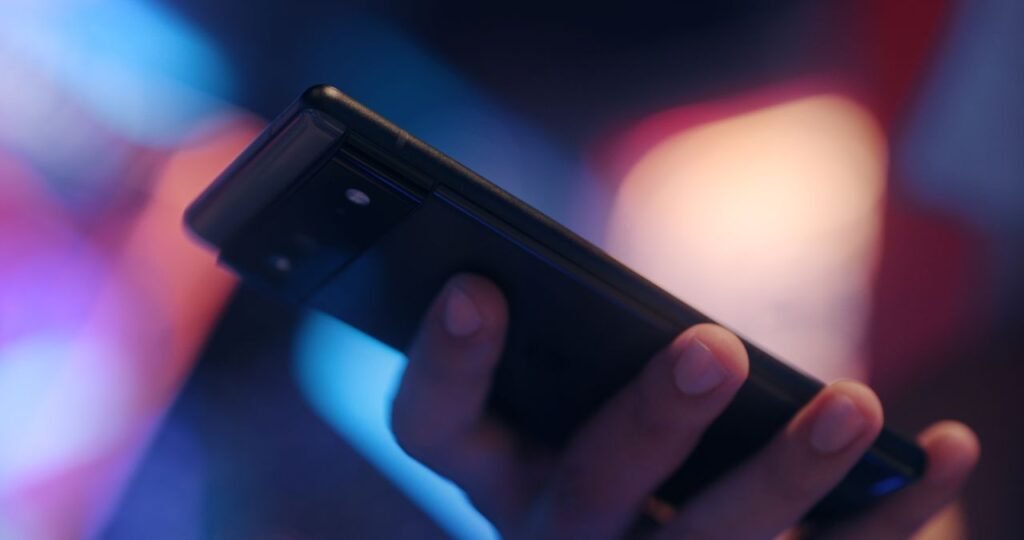
12. Display Size vs Compact Design
One of the most practical decisions in the Google pixel 8 pro vs 9 pro comparison comes down to size.
Choose the larger Pixel 8 Pro form factor if you prefer:
- A bigger screen
- More space for reading
- Larger video viewing area
- A spacious keyboard
- More room for photo editing
Consider the Pixel 9 Pro if you prefer:
- A smaller phone
- Easier one-handed use
- Lower weight
- A compact flagship
- Higher peak display brightness
The Pixel 9 Pro is especially interesting because Google kept the Pro camera system while making the phone substantially smaller.
13. Pixel 8 Pro vs 9 Pro Specifications
Here is a quick side-by-side look at the most important specifications.
| Specification | Pixel 8 Pro | Pixel 9 Pro |
|---|---|---|
| Launch generation | 2023 | 2024 |
| Display | 6.7-inch LTPO OLED | 6.3-inch LTPO OLED |
| Resolution | 1344 x 2992 | 1280 x 2856 |
| Refresh rate | 1–120Hz | 1–120Hz |
| Peak brightness | 2400 nits | 3000 nits |
| Processor | Tensor G3 | Tensor G4 |
| RAM | 12GB | 16GB |
| Storage | Up to 1TB | Up to 1TB |
| Main camera | 50MP | 50MP |
| Ultrawide | 48MP | 48MP |
| Telephoto | 48MP 5x | 48MP 5x |
| Front camera | 10.5MP | 42MP |
| Battery | 5050mAh typical | 4700mAh typical |
| Weight | 213g | 199g |
| Software support | 7 years | 7 years |
Specifications are based on Google’s official Pixel documentation.
14. Price and Value in 2026
Price can change the entire Google pixel 8 pro vs 9 pro buying decision.
The Pixel 8 Pro launched earlier, so by 2026 it may be available through retailers, refurbished sellers, used-phone marketplaces, or remaining inventory at prices below its original launch price.
The Pixel 9 Pro is newer and may command a higher price depending on storage, retailer, condition, and region.
When comparing prices, don’t focus only on the advertised number.
Check:
- Storage capacity
- New versus refurbished condition
- Warranty
- Seller reputation
- Regional model
- Carrier compatibility
- Return policy
- Battery condition for used devices
- Included accessories
- Current promotions
For current official technical information, Google’s Pixel specifications and support pages are the best starting points.
15. Pros and Cons
Pixel 8 Pro Pros
- Large 6.7-inch display
- Excellent triple-camera setup
- 48MP telephoto camera
- 5050mAh typical battery
- 12GB RAM
- Tensor G3 processor
- Seven years of software support
- Premium build
- Strong computational photography
Pixel 8 Pro Cons
- Heavier than Pixel 9 Pro
- Larger body
- Older Tensor generation
- Lower-resolution selfie camera
- Lower peak display brightness than Pixel 9 Pro
Pixel 9 Pro Pros
- More compact 6.3-inch design
- 199g weight
- 16GB RAM
- Tensor G4 processor
- 3000-nit peak display brightness
- 42MP autofocus selfie camera
- 48MP 5x telephoto camera
- Up to 1TB storage
- Seven years of software support
Pixel 9 Pro Cons
- Smaller display
- Smaller battery capacity on paper
- Higher newer-generation pricing in many markets
- Some AI features can depend on software, region, language, or account availability
16. Which Phone Should You Consider?
The Google pixel 8 pro vs 9 pro decision depends heavily on your priorities.
The Pixel 8 Pro makes sense for someone who wants a large flagship display and finds it at a significantly lower price. Its camera hardware remains strong, and Google still provides seven years of official updates from its original availability date.
The Pixel 9 Pro is more attractive for someone who wants a compact flagship without giving up the Pro-level rear camera system.
Its 16GB RAM, Tensor G4 processor, brighter display, lighter body, and 42MP autofocus selfie camera make it a more modern hardware package.
However, buyers should compare the actual prices in their market. If the Pixel 8 Pro is heavily discounted, the difference in everyday experience may not justify paying substantially more.
If the price gap is relatively small, the Pixel 9 Pro’s newer hardware and later support window become more relevant.
17. Buying Tips for Pixel Buyers
Before making a purchase, follow these simple checks:
Check the Exact Model
Make sure the phone supports the cellular bands used by your carrier.
Check Storage
A 128GB phone may be sufficient for casual users, while photographers and video creators may prefer 256GB or more.
Check Warranty
Imported Pixel phones can have different warranty arrangements depending on where they were purchased.
Check Seller Reputation
For older flagship models, avoid suspiciously cheap listings.
Check Battery Condition
This matters especially when purchasing a used Pixel 8 Pro.
Compare Real Prices
Don’t compare original launch prices. Compare the actual price available from reputable sellers today.
Frequently Asked Questions
1. Is the Pixel 9 Pro newer than the Pixel 8 Pro?
Yes. The Pixel 8 Pro became available in October 2023, while the Pixel 9 Pro became available in September 2024.
2. Does the Pixel 9 Pro have a better processor?
The Pixel 9 Pro uses Tensor G4, while the Pixel 8 Pro uses Tensor G3. The Pixel 9 Pro therefore uses Google’s newer Tensor generation.
3. Which phone has more RAM?
The Pixel 9 Pro has 16GB of RAM, compared with 12GB on the Pixel 8 Pro.
4. Does the Pixel 9 Pro have a better selfie camera?
On paper, yes. The Pixel 9 Pro has a 42MP autofocus selfie camera, while the Pixel 8 Pro has a 10.5MP autofocus front camera.
5. Which Pixel has the larger display?
The Pixel 8 Pro has the larger display at 6.7 inches. The Pixel 9 Pro has a 6.3-inch screen.
6. Which phone has the larger battery?
The Pixel 8 Pro has a typical 5050mAh battery, while the Pixel 9 Pro has a typical 4700mAh battery. Battery life in practice depends on usage and other conditions.
7. Do both phones receive seven years of updates?
Yes. Google says Pixel 8 and later phones receive seven years of OS and security updates from their original Google Store availability date in the United States.
8. Does the Pixel 9 Pro have a telephoto camera?
Yes. It has a 48MP 5x telephoto camera and supports Super Res Zoom up to 30x.
9. Is the Pixel 8 Pro still worth considering?
It can be, particularly if you find it at a substantially lower price and prefer its larger screen. Its camera hardware and long software-support commitment remain relevant.
10. Which Pixel is smaller?
The Pixel 9 Pro is smaller and lighter. It measures 152.8 x 72.0 x 8.5mm and weighs 199g, compared with 162.6 x 76.5 x 8.8mm and 213g for the Pixel 8 Pro.
Conclusion
The Google pixel 8 pro vs 9 pro comparison shows that Google’s newer Pro phone isn’t simply a specification upgrade across every category.
The Pixel 8 Pro has a larger display and a slightly larger battery, while its triple-camera system remains highly capable. It also benefits from Google’s seven-year software-support policy.
The Pixel 9 Pro takes a different approach. It offers a more compact body, 16GB RAM, Tensor G4, a brighter 3000-nit display, and a substantially upgraded 42MP autofocus selfie camera. Its later release date also means its seven-year support period begins later.
For large-screen enthusiasts, the Pixel 8 Pro remains an interesting option. For buyers who want a compact flagship with newer hardware and a high-resolution selfie camera, the Pixel 9 Pro provides a compelling specification package.
Ultimately, compare the actual current price, storage configuration, warranty, condition, and features you will use most. That’s the best way to make a practical smartphone buying decision rather than choosing based only on generation numbers.