
If you’re looking for a compact Google phone with excellent cameras, clean Android software, and useful AI features, the Google Pixel 7 vs 8 comparison is still worth exploring in 2026. Although both phones belong to an older Pixel generation, they remain interesting options in the used, refurbished, and discounted smartphone market.
The Pixel 7 arrived with Google’s Tensor G2 processor, a 6.3-inch OLED display, a 50MP main camera, and 5 years of software support. The Pixel 8 followed with the newer Tensor G3 chip, a smaller 6.2-inch 120Hz display, improved camera hardware, and a much longer 7-year update commitment.
That difference in software support is especially important today. Google states that Pixel 8 and later phones receive seven years of OS and security updates, while Pixel 7 receives five years from its original Google Store availability.
So, which phone makes more sense? The answer depends on price, condition, camera needs, display preferences, and how long you expect to keep the device.
Table of Contents

1. Google Pixel 7 vs 8 Overview
The Google Pixel 7 vs 8 battle isn’t about a complete redesign. Instead, Google refined an already successful formula. The Pixel 8 is smaller, brighter, faster, and supported for longer, while the Pixel 7 can still offer strong everyday performance when available at a substantially lower price.
The Pixel 7 launched in 2022 with Android 13 and Google’s Tensor G2 processor. It has 8GB of LPDDR5 RAM and comes with either 128GB or 256GB of UFS 3.1 storage. Its 6.3-inch OLED display supports refresh rates up to 90Hz.
The Pixel 8 launched in 2023 with Android 14 and moved to Google’s Tensor G3 platform. It also has 8GB of RAM and 128GB or 256GB of storage, but its display is a 6.2-inch Actua OLED panel with a 60–120Hz refresh rate.
Quick Comparison
| Feature | Pixel 7 | Pixel 8 |
|---|---|---|
| Launch year | 2022 | 2023 |
| Launch OS | Android 13 | Android 14 |
| Processor | Tensor G2 | Tensor G3 |
| RAM | 8GB | 8GB |
| Storage | 128GB / 256GB | 128GB / 256GB |
| Display | 6.3-inch OLED | 6.2-inch OLED |
| Refresh rate | Up to 90Hz | 60–120Hz |
| Main camera | 50MP | 50MP |
| Ultrawide | 12MP | 12MP |
| Battery | 4,355mAh typical | 4,575mAh typical |
| Water resistance | IP68 | IP68 |
| Software support | 5 years | 7 years |
The specifications show that the Pixel 8 is an evolutionary upgrade rather than a completely different phone. However, several changes become significant when you look at long-term ownership.
2. Design and Build Quality
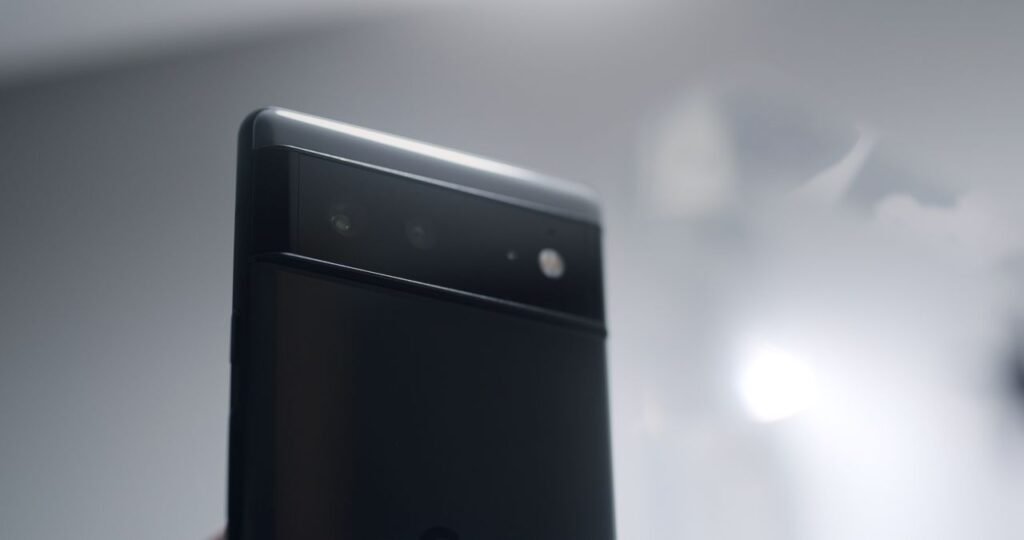
The Google Pixel 7 vs 8 design comparison reveals two phones that share Google’s recognizable camera-bar design but differ in size and proportions.
The Pixel 7 has dimensions of 155.6 x 73.2 x 8.7mm and weighs 197 grams. The Pixel 8 is shorter and narrower at 150.5 x 70.8 x 8.9mm, while its weight drops to 187 grams.
That 10-gram difference doesn’t sound huge on paper, but you’ll notice it when holding the phone for extended periods.
The Pixel 8 also has more rounded design elements, which give it a slightly softer appearance. Its smaller body can be particularly appealing if you prefer phones that are easier to operate with one hand.
Both phones use premium materials and offer IP68 dust and water resistance. Google notes that water and dust resistance can decrease with normal wear, damage, repair, or disassembly, so neither phone should be treated as permanently waterproof.
Which Design Is More Practical?
The Pixel 7’s larger body can be useful for people who prefer a little more physical space. Meanwhile, the Pixel 8’s compact dimensions make it easier to carry.
If you’re upgrading from a large smartphone, either model will feel relatively manageable. However, the Pixel 8 is the more compact choice.
3. Display Comparison
One of the most noticeable improvements in the Google Pixel 7 vs 8 comparison is the display.
The Pixel 7 has a 6.3-inch FHD+ OLED panel with a resolution of 1080 x 2400 pixels and refresh rates up to 90Hz. The Pixel 8 reduces the size slightly to 6.2 inches but adds Google’s Actua display technology and a smoother 60–120Hz refresh rate.
The Pixel 8 also reaches higher advertised brightness levels. Google lists up to 1,400 nits for HDR and up to 2,000 nits peak brightness for the Pixel 8.
This matters outdoors. A brighter display can make maps, messages, photographs, and websites easier to see in strong sunlight.
Refresh Rate Difference
The Pixel 7 can reach 90Hz, which already provides a smoother experience than a standard 60Hz screen.
The Pixel 8 goes further with a 120Hz maximum refresh rate. Scrolling through social media, websites, and menus can therefore feel more fluid.
Display Winner Depends on Preference
If you want the larger screen, the Pixel 7 has the advantage by size.
If you want higher refresh rates and greater brightness, the Pixel 8 has the more advanced display specification.
For most modern smartphone users, the Pixel 8’s display technology is the more attractive package.
4. Performance and Tensor Processors
The Google Pixel 7 vs 8 performance difference comes primarily from Google’s Tensor G2 and Tensor G3 processors.
The Pixel 7 uses Tensor G2, while the Pixel 8 uses Tensor G3. Both chips were designed by Google to support machine-learning functions, photography processing, voice features, and everyday Android performance.
The Pixel 8’s Tensor G3 is the newer generation, so it provides a more modern hardware platform.
For everyday tasks such as:
- Web browsing
- Social media
- YouTube
- Photography
- Messaging
- Navigation
- Video streaming
- Google applications
both phones can handle normal use comfortably.
However, the difference becomes more relevant when you consider long-term software support and newer AI features.
Gaming Performance
Neither phone is primarily marketed as a gaming-focused smartphone. If your priority is sustained high-end gaming performance, there are other devices with more specialized cooling systems and gaming-oriented processors.
For casual and moderate gaming, however, both Pixels remain capable.
The Pixel 8 has the newer Tensor G3 platform, making it the more future-oriented choice between these two generations.
5. RAM and Storage
Both phones provide 8GB of RAM, which means the RAM specification doesn’t create a major difference.
The Pixel 7 comes in 128GB and 256GB configurations, while the Pixel 8 offers the same basic storage choices. Google specifies UFS 3.1 storage for both generations.
Since neither phone offers a microSD card slot, storage selection matters.
If you take lots of photos and videos, 256GB can be more comfortable. If you primarily stream content and use cloud storage, 128GB may be sufficient.
Storage Buying Tip
When buying an older Pixel, don’t look only at the advertised storage capacity. Check:
- Battery condition
- Screen condition
- Camera glass
- USB-C port
- Charging performance
- IMEI and network status
- Originality of replacement parts
- Software update status
A cheaper phone isn’t necessarily a better deal if it needs expensive repairs.
6. Camera Hardware
Camera performance is one of the biggest reasons people consider Pixel phones.
The Google Pixel 7 vs 8 camera comparison is interesting because both phones use a 50MP main camera and a 12MP ultrawide camera.
The Pixel 7 uses a 50MP Octa PD Quad Bayer wide camera with an f/1.85 aperture and a 1/1.31-inch image sensor. Its ultrawide camera is 12MP with a 114-degree field of view.
The Pixel 8 keeps the 50MP main camera concept but uses a newer wide-camera system with an f/1.68 aperture and a 1/1.31-inch sensor. Its 12MP ultrawide camera provides a wider 125.8-degree field of view and adds autofocus.
Main Camera
Both cameras can capture detailed photographs in good lighting.
Google’s computational photography is an important part of the experience. Instead of relying only on megapixels, Pixel phones combine image sensors, software processing, HDR technology, and machine learning.
The Pixel 8’s newer camera hardware gives it an advantage, particularly in challenging lighting conditions.
Ultrawide Camera
The Pixel 8’s ultrawide camera has a wider field of view and autofocus. This is useful for landscapes, architecture, group photographs, and close-up photography.
Google also lists Macro Focus among the Pixel 8’s camera features.
7. Photography Experience
The Google Pixel 7 vs 8 photography experience isn’t simply about camera specifications.
Pixel photography has traditionally emphasized computational photography. Features such as Night Sight, Portrait Mode, Face Unblur, Super Res Zoom, Magic Eraser, and other editing tools are designed to make photography easier for everyday users.
The Pixel 8 adds newer capabilities such as Magic Editor, Best Take, and Macro Focus. Google lists these features among the phone’s camera and editing capabilities.
This can be especially helpful if you don’t want to spend time manually editing photographs.
Daylight Photography
In daylight, both phones can produce detailed and vibrant images. The Pixel 8’s newer processing and camera hardware provide additional flexibility.
Night Photography
Night Sight remains an important part of the Pixel experience.
For users who frequently photograph restaurants, city streets, family events, or indoor scenes, the computational photography system can make a noticeable difference.
Portrait Photography
Portrait Mode can separate subjects from backgrounds using software processing.
Results can vary depending on lighting, hair detail, movement, and background complexity. No smartphone camera produces perfect portrait segmentation in every situation.
8. Video Recording
Video recording is another area where the Google Pixel 7 vs 8 comparison shows incremental improvements.
The Pixel 7 supports 4K recording at 30 and 60 frames per second, as well as 1080p recording. It also includes optical and electronic image stabilization.
The Pixel 8 supports 4K video at 24, 30, and 60fps from its rear cameras. Google also lists features including Macro Focus Video, 10-bit HDR video, Cinematic Blur, Cinematic Pan, and multiple stabilization modes.
For casual video creators, either phone can produce good footage.
The Pixel 8 provides a broader selection of modern video tools, making it more attractive if video is a major part of your smartphone use.
9. Battery and Charging
Battery capacity isn’t the only factor that determines battery life, but the specifications show an improvement.
The Pixel 7 has a typical battery capacity of 4,355mAh, while the Pixel 8 has a typical capacity of 4,575mAh. Google rates both phones for more than 24 hours of battery life under its testing conditions.
The Pixel 8 also supports faster wired charging, with Google stating that it can reach up to 50% in around 30 minutes using the company’s 30W USB-C charger.
Wireless Charging
Both models support wireless charging and Battery Share.
Charging results vary based on charger, temperature, battery health, usage, and other conditions. Therefore, laboratory charging figures shouldn’t be treated as guaranteed everyday results.
If you purchase a used Pixel 7, battery health deserves particular attention because battery aging is inevitable.
10. Software and Android Updates
This is perhaps the most important part of the Google Pixel 7 vs 8 comparison in 2026.
Google currently states that Pixel 8 and later models receive seven years of OS and security updates, starting from when the device first became available on the Google Store in the United States. Pixel 7 receives five years of updates from its original availability date.
That means the Pixel 8 has a significantly longer official support window.
Google’s support documentation confirms that Pixel phones receive operating-system updates, security enhancements, bug fixes, and Pixel Feature Drops.
Why Software Support Matters
Longer support can provide:
- Better security
- More Android versions
- New Pixel features
- Better app compatibility
- Greater confidence when keeping the phone for several years
For a buyer in 2026, this difference shouldn’t be overlooked.
The Pixel 7 can still be useful, but the Pixel 8 has the stronger long-term support position.
11. AI and Smart Features
Google has increasingly built AI into the Pixel experience.
The Google Pixel 7 vs 8 comparison therefore goes beyond conventional hardware specifications.
The Tensor platform enables features involving photography, speech, translation, voice processing, and other machine-learning tasks.
The Pixel 8 generation introduced newer AI-focused capabilities and supports features such as Magic Editor and Best Take.
Magic Editor
Magic Editor is designed to make complex photo adjustments easier. Instead of requiring traditional professional editing software, users can make certain changes directly in Google Photos.
Best Take
Best Take can help create a better group photograph by combining suitable facial expressions from multiple images, where supported.
Everyday AI
Pixel AI features are most useful when they save time.
For example, editing a photograph in seconds can be more practical than spending several minutes using a traditional editor.
Feature availability can vary by region, language, account, and software version, so buyers should check Google’s current requirements before assuming every feature will work in their market.
12. Connectivity and Security
Both generations support modern wireless connectivity and 5G, although exact network compatibility can depend on model, carrier, and region.
The Pixel 8 includes Wi-Fi 7 and Bluetooth 5.3 according to Google’s specifications.
The Pixel 7 supports Wi-Fi 6E and Bluetooth 5.2 according to Google’s hardware specifications.
Both phones also include Google’s Titan security hardware.
Security features are important because smartphones now contain banking information, private photographs, passwords, emails, and personal conversations.
Google’s longer update policy for the Pixel 8 gives it an additional advantage for long-term security maintenance.
For official support information, check Google Pixel Phone Help before purchasing an older Pixel.
13. Everyday User Experience
For everyday use, the Google Pixel 7 vs 8 difference may feel smaller than the specification sheet suggests.
Both phones provide:
- Clean Android software
- Strong photography
- Google Assistant and Google services
- USB-C connectivity
- Wireless charging
- IP68 protection
- 5G connectivity
- Smooth everyday performance
- High-quality OLED displays
The Pixel 8 feels more modern because of its compact body, 120Hz display, newer processor, improved camera hardware, and longer support period.
The Pixel 7 still makes sense when its purchase price is significantly lower.
That’s particularly true for buyers who mainly need a reliable camera phone for messaging, browsing, social media, and video streaming.
14. Google Pixel 7 vs 8 Specifications
Here is a straightforward Google Pixel 7 vs 8 specification table.
| Specification | Google Pixel 7 | Google Pixel 8 |
|---|---|---|
| Release | 2022 | 2023 |
| Operating system at launch | Android 13 | Android 14 |
| Processor | Google Tensor G2 | Google Tensor G3 |
| Security chip | Titan M2 | Titan M2 |
| RAM | 8GB LPDDR5 | 8GB LPDDR5X |
| Storage | 128GB / 256GB | 128GB / 256GB |
| Display | 6.3-inch OLED | 6.2-inch Actua OLED |
| Resolution | 1080 x 2400 | 1080 x 2400 |
| Refresh rate | Up to 90Hz | 60–120Hz |
| Main camera | 50MP | 50MP |
| Ultrawide | 12MP | 12MP |
| Front camera | 10.8MP | 10.5MP |
| Typical battery | 4,355mAh | 4,575mAh |
| Wireless charging | Yes | Yes |
| Water resistance | IP68 | IP68 |
| Software support | 5 years | 7 years |
The specifications are based on Google’s official hardware documentation.
15. Price and Buying Considerations
The Google Pixel 7 vs 8 price difference can change frequently because these phones are now older models.
Instead of relying on original launch prices, buyers should compare current retail, refurbished, used, and open-box prices.
A Pixel 7 may become attractive when sold at a significant discount.
However, a Pixel 8 can justify a higher price because it has:
- A newer processor
- A brighter 120Hz display
- Newer camera hardware
- Larger battery capacity
- More advanced camera features
- Seven years of official updates
Buying Used?
If you’re purchasing either model second-hand, check the following:
Battery: Ask about battery condition and charging behavior.
Display: Look for cracks, burn-in, dead pixels, or unusual color problems.
Camera: Test every rear and front camera.
USB-C port: Make sure the cable connects securely.
IMEI: Verify the device isn’t reported lost or stolen.
Network: Confirm that the phone works with your carrier.
Software: Check the installed Android version and security update status.
Repair history: Ask whether the display, battery, or motherboard has been replaced.
These checks can save you from a headache later.
16. Which Phone Makes More Sense for Different Users?
Rather than treating the Google Pixel 7 vs 8 choice as one-size-fits-all, consider your priorities.
Choose Pixel 7 If:
- You find it at a much lower price.
- You want a 6.3-inch display.
- You mainly use your phone for everyday tasks.
- You want strong Pixel photography without paying for newer hardware.
- You’re comfortable with the shorter remaining support window.
Choose Pixel 8 If:
- You want a 120Hz display.
- You prefer a smaller phone.
- You want the newer Tensor G3 processor.
- You want newer camera capabilities.
- You plan to keep the phone for several years.
- Long-term software support matters to you.
The important thing is to compare the actual condition and price of each phone rather than focusing only on the model number.
17. Pros and Cons
Pixel 7 Pros
- Excellent computational photography
- 6.3-inch OLED display
- Tensor G2 performance
- Wireless charging
- IP68 rating
- 128GB and 256GB storage choices
- Often available at lower used prices
Pixel 7 Cons
- Older Tensor processor
- 90Hz maximum refresh rate
- Shorter official support period
- Older camera processing platform
- Battery condition can vary significantly on used units
Pixel 8 Pros
- Tensor G3 processor
- 120Hz display
- Brighter Actua display
- Improved ultrawide camera
- Newer AI and editing features
- Larger typical battery
- Seven years of OS and security updates
- More compact design
Pixel 8 Cons
- Usually costs more than a Pixel 7
- Still not designed as a dedicated gaming phone
- No microSD storage
- Charging remains relatively modest compared with some competitors
18. Frequently Asked Questions
1. Is the Pixel 8 better than the Pixel 7?
The Pixel 8 has several hardware and software advantages, including Tensor G3, a 120Hz display, newer camera hardware, a larger typical battery, and seven years of official updates. The Pixel 7 can still be attractive when its price is substantially lower.
2. Is the Pixel 7 still worth buying in 2026?
The Pixel 7 can still be useful as a budget or refurbished smartphone, especially if you find one in excellent condition at an appropriate price. However, buyers should consider its shorter remaining software-support period.
3. Does Pixel 8 have a better camera?
The Pixel 8 has updated camera hardware, including a wider-aperture main camera and an ultrawide camera with autofocus. Google also provides newer camera and editing features on the Pixel 8.
4. Does Pixel 8 have a 120Hz display?
Yes. The Pixel 8 uses a Smooth Display capable of switching between 60Hz and 120Hz.
5. Which has a bigger battery, Pixel 7 or Pixel 8?
The Pixel 8 has the larger typical battery capacity at 4,575mAh, compared with 4,355mAh for the Pixel 7.
6. Does Pixel 7 have wireless charging?
Yes. The Pixel 7 supports wireless charging and Battery Share.
7. How long will Pixel 8 receive updates?
Google says Pixel 8 and later phones receive seven years of OS and security updates, starting from the device’s first availability on the Google Store in the United States.
8. How long does Pixel 7 receive updates?
Google’s current support policy lists the Pixel 7 among devices receiving five years of updates from their first availability on the Google Store in the United States.
9. Is Pixel 8 smaller than Pixel 7?
Yes. The Pixel 8 has a 6.2-inch display compared with the Pixel 7’s 6.3-inch screen, and its overall body is shorter and narrower.
10. Which Pixel should you buy for long-term use?
The Pixel 8 has the longer official software-support commitment and newer hardware, making it more suitable for buyers who want to keep their phone for several years. The Pixel 7 can make sense when the price difference is large enough to justify choosing the older model.
19. Final Verdict
The Google Pixel 7 vs 8 comparison shows a classic generational upgrade rather than a complete transformation.
The Pixel 7 remains a capable smartphone with a strong camera system, OLED display, Tensor G2 processor, wireless charging, and IP68 protection. If you find one at an attractive price, it can still serve as a practical everyday phone.
The Pixel 8, however, brings several meaningful improvements. Its Tensor G3 processor, 120Hz Actua display, updated camera hardware, larger battery, compact body, newer AI features, and seven-year update commitment make it a more modern package.
For buyers in 2026, the biggest factor may not be the camera megapixel count or processor name. It may be software longevity. A smartphone that receives updates for longer can remain useful and secure for more years.
If the Pixel 7 is considerably cheaper, it can be an appealing budget choice. If the prices are relatively close, the Pixel 8’s newer hardware and longer support period become important factors to consider.
Ultimately, compare the actual price, condition, battery health, storage capacity, and remaining software support before making your purchase.
That approach will help you choose the Pixel that fits your needs rather than simply choosing the newer number.