
Choosing between Google’s latest Pro Pixel and Apple’s Pro iPhone can be tricky. This detailed Google Pixel 10 Pro vs iPhone 17 Pro comparison breaks down the major differences in simple language so you can understand which phone fits your needs.

Table of Contents
Google Pixel 10 Pro vs iPhone 17 Pro: Quick Overview
The Google Pixel 10 Pro vs iPhone 17 Pro comparison brings together two premium smartphones built around different approaches. Google focuses heavily on computational photography, artificial intelligence, Android integration, and Google’s own services. Apple, meanwhile, combines its A-series processor, iOS ecosystem, camera processing, and tight hardware-software integration.
Both phones target users who want a premium experience. However, they don’t necessarily appeal to the same type of buyer.
Before choosing either device, it’s worth looking beyond specifications. Camera quality, software experience, battery life, accessories, ecosystem compatibility, and long-term updates can all affect your everyday experience.
Key Differences at a Glance
| Feature | Google Pixel 10 Pro | iPhone 17 Pro |
|---|---|---|
| Operating System | Android | iOS |
| Processor | Google Tensor | Apple A-series Pro chip |
| Camera Focus | Computational photography and AI | Photography and professional video |
| AI | Gemini and Google AI features | Apple Intelligence |
| Ecosystem | Google/Android | Apple |
| Display | Pro-grade OLED display | Pro-grade OLED display |
| Security | Google security features | Face ID and Apple security |
| Charging | Wired and wireless charging | Wired and wireless charging |
| Best For | Google services, AI, photography | iOS, video, Apple ecosystem |
Specifications and features can vary by market and software version, so buyers should verify the configuration available in their region.
Google Pixel 10 Pro vs iPhone 17 Pro: Design and Build Quality
Design is one of the first things you’ll notice when comparing the Google Pixel 10 Pro vs iPhone 17 Pro. Both phones have a premium construction, but their visual identities are quite different.
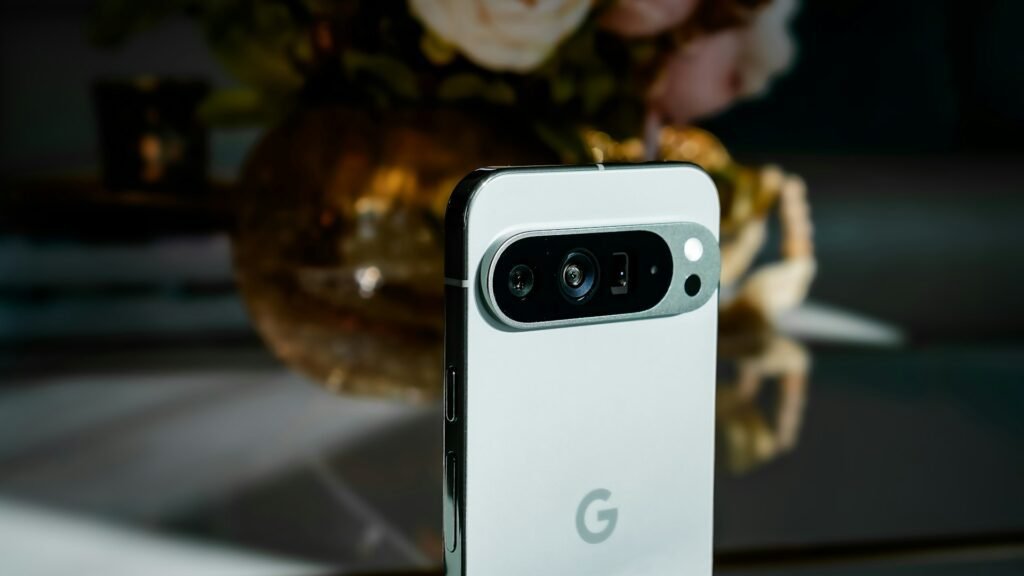
The Pixel Pro series uses Google’s distinctive camera-bar design. This makes the phone immediately recognizable. Instead of placing the cameras inside a traditional square module, Google uses a horizontal camera housing across the upper portion of the rear panel.
Apple follows its own recognizable design language. The iPhone 17 Pro maintains the familiar premium iPhone appearance while introducing its own hardware refinements.
Premium Construction
Both smartphones are designed to feel like flagship devices.
A premium smartphone should provide:
- A strong frame
- High-quality glass or equivalent rear material
- Protection against everyday scratches
- Water and dust resistance
- A comfortable grip
- Carefully finished buttons and controls
The exact materials and dimensions should be checked against the official specifications for your market before purchasing.
Ergonomics Matter
A phone may look excellent on a specification sheet but still feel uncomfortable after several hours.
Weight distribution is particularly important. Camera hardware, battery capacity, and frame materials can all influence how a phone feels in your hand.
If you regularly use your phone one-handed, consider its width and weight rather than focusing only on screen size.
Design Style
Google’s design tends to be more visually distinctive. The Pixel camera bar has become one of the company’s signature features.
Apple takes a different approach. The iPhone’s design emphasizes consistency and familiarity across generations.
Neither approach is automatically better. Your preference may simply depend on whether you prefer Google’s more distinctive styling or Apple’s recognizable design language.
Display Comparison
The display is another major part of the Google Pixel 10 Pro vs iPhone 17 Pro debate.
Both devices belong to the premium smartphone category, so users can expect excellent OLED-based viewing experiences.
Brightness and Outdoor Visibility
Brightness matters when you’re using a phone outdoors.
A bright display can make:
- Maps easier to read
- Photos easier to view
- Videos more enjoyable
- Text more visible in sunlight
- Gaming more comfortable
Peak brightness figures don’t always tell the whole story, though. Automatic brightness behavior, display calibration, and ambient-light management also influence real-world visibility.
Refresh Rate
High refresh rates make scrolling and animations appear smoother.
For everyday activities such as:
- Browsing websites
- Scrolling social media
- Reading articles
- Navigating menus
- Playing compatible games
a high refresh-rate display can provide a noticeably smoother experience.
Both phones are designed for users who expect flagship-level smoothness.
Color and HDR
OLED displays can deliver deep blacks and strong contrast because individual pixels can be controlled independently.
That’s useful for:
- HDR movies
- Streaming services
- Photography
- Gaming
- Reading in dark environments
For photographers and content creators, accurate colors are especially valuable because the screen becomes part of the editing workflow.
Camera Comparison
For many buyers, the camera will be the deciding factor in the Google Pixel 10 Pro vs iPhone 17 Pro comparison.
Google has built the Pixel brand around computational photography. Apple’s iPhone Pro models, meanwhile, have become especially popular among photographers and video creators.
Main Camera Experience
Pixel phones use Google’s computational photography algorithms to improve image processing.
The system can work on areas such as:
- Exposure
- HDR processing
- Skin tones
- Detail
- Noise reduction
- Dynamic range
- Night photography
Google’s AI-powered photography tools are another important part of the Pixel experience.
iPhone Photography
Apple combines advanced camera hardware with its image-processing pipeline.
The iPhone Pro line also focuses heavily on video recording, making it attractive to creators who shoot social media clips, short films, product videos, or professional content.
Zoom Photography
Telephoto cameras can provide better results when photographing distant subjects.
Instead of relying entirely on digital enlargement, optical or sensor-based approaches can preserve more detail.
When comparing the phones, don’t look only at megapixels. Consider the entire camera system.
Video Recording
Video is one area where iPhones have historically placed significant emphasis.
The iPhone Pro series supports professional-oriented recording features and editing workflows.
Pixel devices also offer advanced video capabilities and Google’s computational processing.
If you’re primarily a photographer, the Pixel’s computational photography approach may appeal to you. If you’re a frequent video creator, Apple’s ecosystem and video tools may be particularly relevant.
Performance and Processor
Performance is another key factor in the Google Pixel 10 Pro vs iPhone 17 Pro comparison.
Google’s Pixel Pro uses a Tensor processor designed around Google’s software and AI strategy. Apple uses its own Pro-series chip architecture for the iPhone Pro.
Everyday Performance
For normal activities, both phones are designed to handle demanding workloads.
You can expect flagship phones to handle:
- Web browsing
- Social media
- Streaming
- Photography
- Multitasking
- Video editing
- Gaming
- Productivity applications
without major difficulty under typical conditions.
Gaming Performance
Gaming performance depends on more than processor speed.
Other factors include:
- GPU performance
- Thermal management
- Game optimization
- Display refresh rate
- Battery temperature
- Software optimization
Apple’s tight control over hardware and software gives developers a consistent platform to optimize for.
Google’s Android ecosystem provides greater hardware variety and customization.
Artificial Intelligence
AI is becoming increasingly important in smartphone performance.
Google has made AI a central part of the Pixel experience. Apple is also integrating AI features into its software ecosystem.
These capabilities can assist with:
- Photo editing
- Text generation
- Summaries
- Voice features
- Search
- Productivity
- Personalization
The availability of specific AI features may vary by country, language, account, and software version.
Battery Life and Charging
Battery performance can make or break a smartphone experience.
In the Google Pixel 10 Pro vs iPhone 17 Pro comparison, both devices are designed to provide all-day use under typical conditions, but actual endurance varies significantly.
Your usage matters.
For example, battery consumption can increase with:
- 5G
- High screen brightness
- GPS
- Gaming
- Video recording
- Background synchronization
- High refresh rates
Charging
Fast charging can be useful when you’re short on time.
Wireless charging also adds convenience because you don’t need to connect a cable every time you want to top up the battery.
However, charging speed isn’t the only consideration. Battery health and charging habits can also affect long-term ownership.
Software and AI Features
Software is perhaps the biggest difference between these two phones.
The Pixel uses Google’s Android software environment, while the iPhone runs Apple’s iOS.
Pixel Software Experience
Google’s version of Android offers deep integration with Google services.
Users can benefit from features connected to:
- Google Photos
- Google Assistant/Gemini
- Google Maps
- Gmail
- Google Drive
- Chrome
- Google Search
The Pixel experience also emphasizes AI-powered features.
iPhone Software Experience
iOS provides Apple’s tightly integrated software environment.
It works particularly well with other Apple products such as:
- Mac
- iPad
- Apple Watch
- AirPods
Features such as AirDrop and iCloud make moving between Apple devices convenient.
Updates
Long-term software support is an important factor when buying an expensive smartphone.
A phone that receives regular security and operating-system updates can remain useful for many years.
Before purchasing, check the manufacturer’s current support policy and the specific software version offered in your region.
Storage and Connectivity
Premium smartphones are frequently used for storing high-resolution photos, 4K video, applications, documents, and offline media.
Storage capacity should therefore be considered carefully.
Choosing Storage
A basic user may be comfortable with a lower storage tier.
However, you may want more storage if you:
- Record lots of videos
- Take thousands of photos
- Download movies
- Play large games
- Keep files offline
- Create professional content
Cloud storage can reduce the need for physical storage, but it also depends on internet access and subscription plans.
Connectivity
Both flagship phones support modern connectivity technologies.
Depending on the specific market model, features may include:
- 5G
- Wi-Fi
- Bluetooth
- NFC
- Satellite-related capabilities
- Modern USB connectivity
Regional variations are important, particularly for cellular bands and eSIM support.
Audio and Multimedia
A premium phone should also deliver a strong multimedia experience.
Stereo speakers can improve video playback, gaming, and music listening.
Both devices are designed around high-quality multimedia experiences, although users who require professional audio should consider dedicated headphones or external microphones.
The display and speakers work together to create the overall entertainment experience.
For watching Netflix, YouTube, or other streaming services, a bright OLED panel combined with stereo sound can make a noticeable difference.
Security and Privacy
Security is increasingly important because smartphones store personal photographs, financial information, emails, messages, and passwords.
The Pixel and iPhone approaches differ because Google and Apple operate different software ecosystems.
Pixel Security
Google provides multiple security mechanisms within Android and Pixel hardware.
These can include biometric authentication, encryption, security updates, and Google’s Titan security architecture.
iPhone Security
Apple uses Face ID, hardware-backed security technologies, encryption, and its controlled software environment.
Apple also places strong emphasis on privacy controls.
When choosing a phone, examine how each ecosystem handles your data and which privacy settings are important to you.
Durability and Long-Term Use
A smartphone isn’t just a one-year purchase for most people.
Many buyers keep premium devices for several years.
Durability therefore matters.
Look for:
- Water resistance
- Strong frame construction
- Durable display glass
- Long software support
- Replacement parts availability
- Reliable accessory availability
A protective case and screen protector can also reduce the risk of accidental damage.
Google Pixel 10 Pro vs iPhone 17 Pro: Pros and Cons
Google Pixel 10 Pro Pros
- Strong computational photography approach
- Deep Google services integration
- AI-focused features
- Clean Android experience
- Distinctive camera design
- Strong photography tools
Google Pixel 10 Pro Cons
- Some AI features may vary by region
- Android ecosystem experience differs from iOS
- Certain hardware specifications may vary by market
- Google’s Tensor strategy isn’t aimed solely at benchmark performance
iPhone 17 Pro Pros
- Strong processor performance
- Mature iOS ecosystem
- Excellent video-focused capabilities
- Strong integration with Apple devices
- Premium construction
- Extensive accessory ecosystem
iPhone 17 Pro Cons
- iOS provides less customization than Android in some areas
- Apple accessories can increase overall ownership costs
- Some features work best inside Apple’s ecosystem
Which Phone Is Better for Different Users?
Rather than declaring one universal winner, it’s more useful to match each phone with a user’s priorities.
For Photography
The Pixel approach is particularly focused on computational photography and AI image processing.
If still photography and Google’s editing tools are your priorities, examine the Pixel’s camera features carefully.
For Video Creation
The iPhone Pro line has a strong focus on video creation and professional workflows.
Creators should compare recording formats, stabilization, microphones, editing applications, and file-transfer workflows.
For Android Users
Android users may find the Pixel environment familiar and convenient.
Google services also integrate naturally with the device.
For Apple Users
If you already own a Mac, iPad, Apple Watch, or AirPods, the iPhone may fit naturally into your existing setup.
The ecosystem can be a major part of the overall experience.
For AI Features
Google and Apple both offer AI features, but their approaches differ.
Google integrates AI deeply into its Pixel software and photography tools, while Apple integrates Apple Intelligence into supported parts of its ecosystem.
Price and Value Considerations
Price is an important part of any flagship comparison.
The advertised launch price isn’t necessarily the final price you’ll pay.
Retailers may offer:
- Trade-in deals
- Seasonal discounts
- Promotional bundles
- Carrier incentives
- Financing
- Storage upgrades
Before purchasing, compare the total cost rather than just the headline price.
You can also check the official manufacturer websites for current specifications and regional availability.
Google Pixel 10 Pro vs iPhone 17 Pro: 6 Frequently Asked Questions
1. Is Google Pixel 10 Pro better than iPhone 17 Pro?
The answer depends on your priorities. Pixel emphasizes Google’s AI and computational photography, while iPhone Pro emphasizes Apple’s ecosystem, processor performance, and professional video capabilities.
2. Which phone has the better camera?
Both offer advanced camera systems. Pixel photography focuses strongly on computational processing, while the iPhone Pro combines advanced photography with extensive video capabilities.
3. Which phone is better for gaming?
Both are capable flagship smartphones. Actual gaming performance depends on the game, software optimization, thermal conditions, and graphics settings.
4. Does Pixel 10 Pro use Android?
Yes. The Pixel Pro series uses Google’s Android software experience.
5. Does iPhone 17 Pro use iOS?
Yes. The iPhone 17 Pro runs Apple’s iOS operating system.
6. Which phone should I buy?
Consider your existing ecosystem, camera needs, software preferences, battery requirements, storage needs, and budget. Those factors will help you determine which device fits your situation.
7. Is Pixel better for AI features?
Google places significant emphasis on AI across the Pixel experience. Apple also provides AI capabilities through Apple Intelligence. Feature availability can depend on the device, software version, language, and region.
8. Which phone is better for long-term use?
Both are designed as premium smartphones with long-term software support. Before buying, check the latest support commitments and availability in your country.
Final Thoughts
The Google Pixel 10 Pro vs iPhone 17 Pro comparison shows that these smartphones take different approaches to the flagship market.
The Pixel experience is strongly connected to Google services, computational photography, Android, and AI. The iPhone Pro experience focuses on Apple’s hardware-software integration, iOS, performance, photography, and professional video.
There isn’t one set of features that will matter equally to every buyer.
If you’re already invested in Google’s ecosystem, the Pixel may fit naturally into your workflow. If you use several Apple products, the iPhone can provide a highly integrated experience.
The smartest approach is to compare the features that actually matter to you instead of choosing based solely on specifications.